Guided Bone Regeneration or GBR
Advanced Bone Grafting Techniques
Rebuild lost bone structure with innovative GBR techniques, creating the foundation for successful dental implants and optimal oral health.

What is Guided Bone Regeneration?
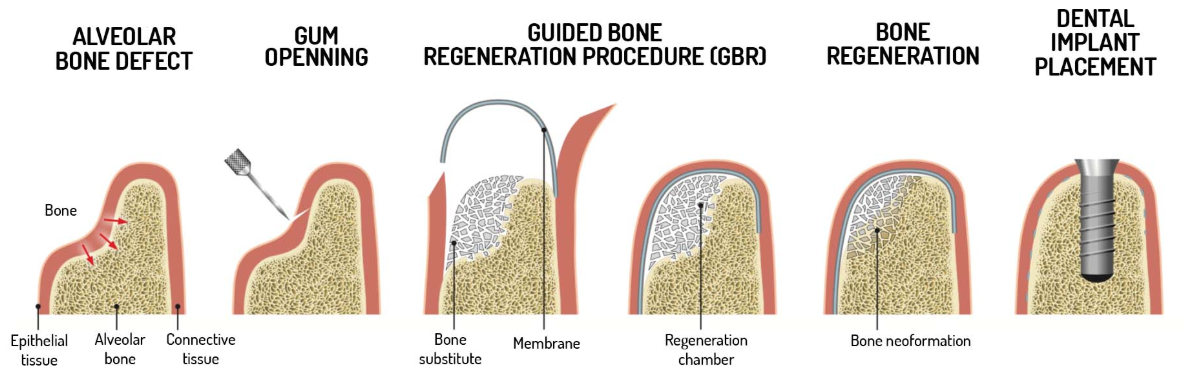
Guided Bone Regeneration (GBR) is a crucial dental procedure used to rebuild lost or insufficient jawbone, creating a solid, stable foundation for dental implants.
It is necessary when natural bone has deteriorated due to tooth loss, trauma, or gum disease, as implants require adequate bone volume and density to successfully fuse with the jaw.
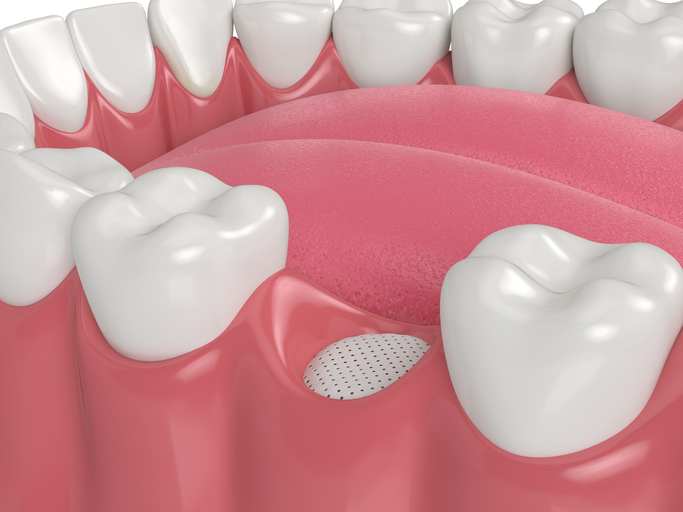
Our bone regeneration approach combines advanced biomaterials with specialized membranes to guide new bone growth in specific areas. This predictable procedure restores both height and width of jawbone, enabling successful implant placement even in challenging cases.

Key Reasons for Needing GBR
Enabling Dental Implants
If the alveolar ridge (jawbone) is too narrow or short, an implant cannot be placed safely or securely. GBR increases bone volume to allow for proper implant placement.
Preventing Future Bone Loss
After a tooth is extracted, the surrounding bone can resorb by 40% to 60% within 2 to 3 years. GBR (often as socket preservation) stops or minimizes this natural resorption.
Improving Implant Success & Longevity
A strong, high-quality bone foundation prevents long-term implant failure, such as the implant becoming loose or exposed.
Aesthetics and Function
Restoring bone height and width supports the gum tissue properly, leading to a more natural-looking smile and restoring normal chewing/speaking abilities.
Fixing Peri-implant Defects
GBR is used to correct bone loss (dehiscence or fenestration) around existing implants caused by infection.
GBR Components & Materials
Bone Graft Materials
Various options including autograft (patient's own bone), allograft (donor bone), alloplasts (synthetic), and xenografts (animal-derived) for different clinical situations.
Barrier Membranes
Resorbable and non-resorbable membranes that prevent soft tissue invasion, allowing bone cells to regenerate undisturbed in the treatment area.
Growth Factors
Biologically active proteins (PRF, BMP) that stimulate and accelerate bone formation for enhanced healing and predictable results.
Fixation Devices
Titanium screws and tacks that secure membranes in place, ensuring stable conditions for optimal bone regeneration.
Depending on the site of bone loss in our jaws the GBR can be used to :
To increase the Width of bone
1. Conventional GBR with or without Titanium mesh
2. Ridge Split procedure
To increase the Height of bone
3. Sinus Lift procedure
4. GBR with Titanium mesh for conventional GBR
Ridge Split Procedure
An innovative technique for horizontal bone augmentation
What is Ridge Split?
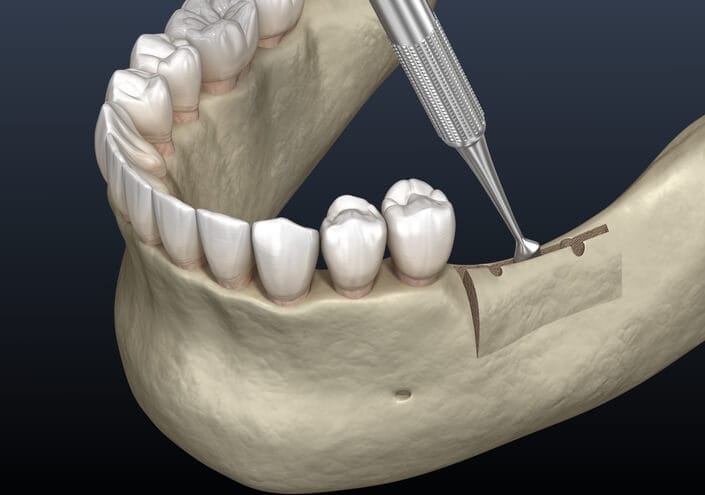
Ridge split (also called ridge expansion or bone splitting) is a surgical technique used to increase the width of a narrow jawbone, allowing for dental implant placement without the need for extensive bone grafting.
How It Works:
- Precise Division: The ridge is carefully split lengthwise using specialized instruments
- Gentle Expansion: The split edges are gradually widened to create space
- Bone Grafting: Bone graft material is placed in the created space
- Implant Placement: Dental implants can often be placed simultaneously
Benefits:
- Minimally invasive alternative to block grafting
- Reduces treatment time significantly
- Often allows immediate implant placement
- Preserves existing bone structure
- Faster healing and recovery
Ideal for Narrow Ridges
Perfect for cases where the jawbone is too narrow for implants but has adequate height
Time Saving
Significantly reduces overall treatment time compared to traditional bone grafting
High Success Rate
Proven technique with excellent long-term outcomes when performed by experienced surgeons
Sinus Lift: Direct vs Indirect
Understanding the two approaches to sinus augmentation
Indirect Sinus Lift (Osteotome Technique)
When used: Suitable for cases requiring 1-4mm of bone height increase.
Procedure: The sinus floor is gently lifted through the implant site using specialized instruments, without creating a surgical window.
Advantages:
- Less invasive with minimal trauma
- Faster healing time
- Can be done simultaneously with implant placement
- Reduced postoperative discomfort
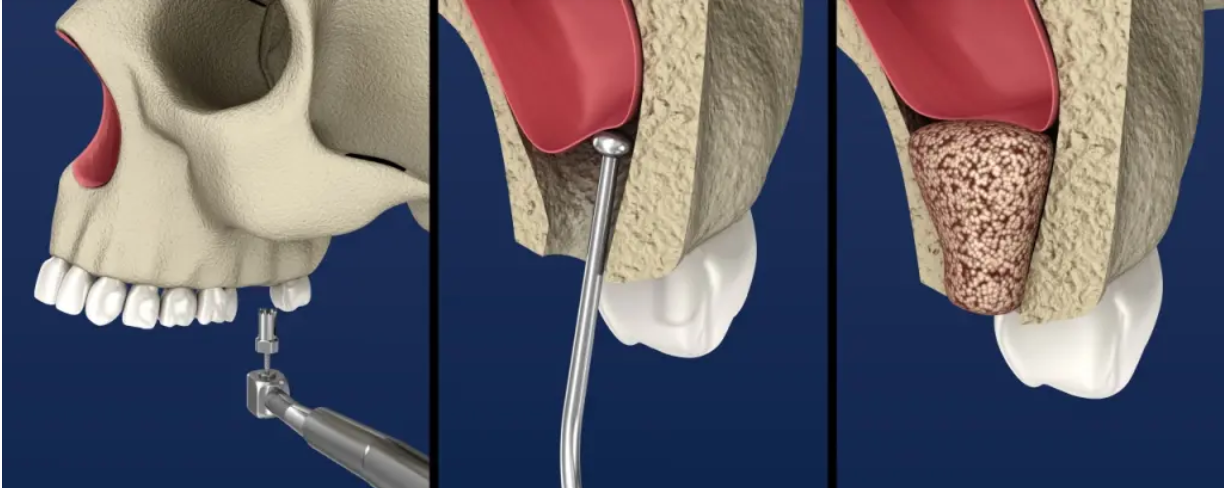
Direct Sinus Lift (Lateral Window Technique)
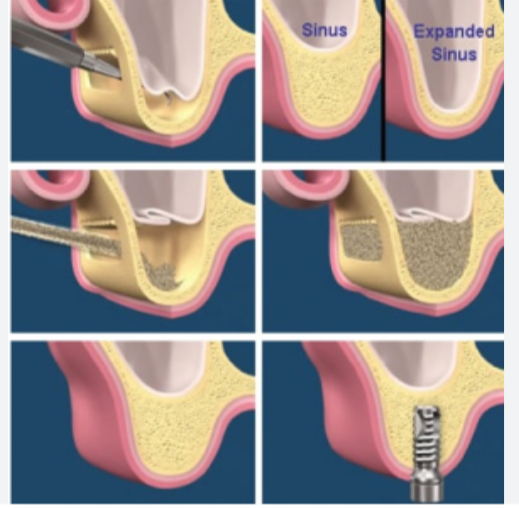
When used: Required for cases needing more than 4-5mm of bone height increase.
Procedure: A surgical window is created in the sinus wall to access the sinus cavity. The sinus membrane is carefully lifted, and bone graft material is placed beneath it.
Advantages:
- Allows for greater bone augmentation
- Better visualization of sinus anatomy
- More predictable results for large defects
- Can correct severe bone loss cases
Which Technique is Right for You?
We at panache dental have specialized instruments and devices to carry out such procedures with ease so that patient is really comfortable duting and after the procedure.
Key Aspects of the Procedure
Purpose
To make it possible for patients with inadequate bone in the posterior maxilla to receive stable dental implants.
Techniques
Lateral Wall (Direct) Approach: A small incision is made to open a "window" in the jawbone to access and lift the sinus membrane.
Crestal (Indirect) Approach: A less invasive technique that accesses the sinus through the same hole prepared for the dental implant.
Bone Graft Material
Can be autogenous (patient's own bone), allograft (human donor), xenograft (bovine bone), or synthetic materials.
Healing Time
The graft typically requires 4–9 months to mature and fuse with the existing bone before the implant can be inserted, though, in some cases, the implant can be placed at the same time as the graft.
The GBR Procedure
Comprehensive Evaluation
3D imaging and bone density assessment to determine exact bone requirements and plan GBR procedure.
Site Preparation
Careful removal of any compromised tissue and creation of space for bone graft material placement.
Graft Placement
Precise placement of bone graft material in the deficient area, ensuring proper contour and volume.
Membrane Application
Placement of barrier membrane to protect graft and direct bone growth in desired areas.
Suturing & Healing
Secure closure with sutures and protective dressing for optimal healing conditions.

When is Guided Bone Regeneration Needed?
Insufficient Bone for Implants
When jawbone lacks adequate height, width, or density to support dental implants, GBR creates the necessary foundation.
Post-Extraction Bone Loss
Prevents natural bone resorption after tooth extraction, preserving ridge dimensions for future restoration.
Periodontal Bone Defects
Reverses bone loss caused by gum disease, restoring support for natural teeth and improving oral health.
Aesthetic Enhancement
Corrects facial contour defects and provides support for lips and cheeks, improving overall appearance.
Recovery and Healing Process
Week 1-2
Initial healing with mild swelling and discomfort. Soft diet and gentle oral hygiene to protect the surgical site.
Week 3-6
Early bone formation begins. Most discomfort resolves. Gradual return to normal activities and diet.
Month 3-6
Significant bone maturation. Follow-up imaging to assess bone regeneration progress and plan next steps.
Month 6-9
Complete bone integration achieved. Site ready for implant placement or final restoration.
Benefits of Guided Bone Regeneration
Enables Dental Implants
Creates sufficient bone volume for successful implant placement even in previously impossible cases.
Preserves Natural Teeth
Supports existing teeth by rebuilding lost bone structure and preventing further tooth loss.
Improves Facial Aesthetics
Restores facial contours and provides support for lips and cheeks, enhancing overall appearance.
Predictable & Proven
Evidence-based procedure with high success rates and predictable long-term outcomes.
Frequently Asked Questions
Ready to Rebuild Your Foundation?
Discover how guided bone regeneration can prepare you for successful dental implants and restore your oral health.